Egg Trees, Bunnies and Pysanky: The Roots of American Easter Decorating
FestiFowl Team
Mar 25, 2026
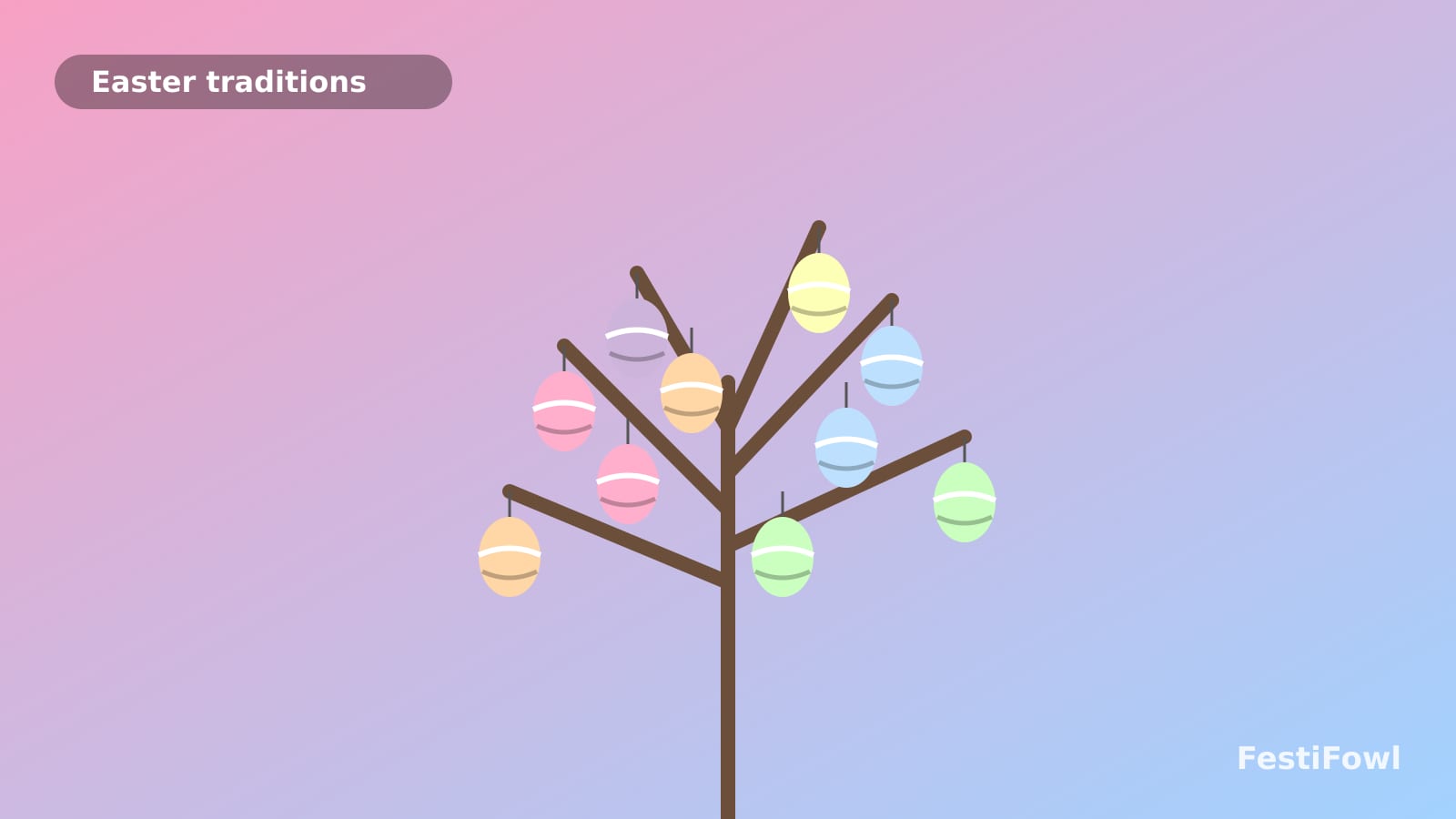
Easter decorating in America is gentler than Christmas or Halloween: pastels, fresh branches and eggs, lots of eggs. Much of it traces back to a few German immigrant communities in Pennsylvania. Here's the story, and how to borrow from it for your own porch.
The Easter bunny came by ship
German immigrants who settled in Pennsylvania in the 1700s brought the "Osterhase," an egg-laying hare that left colored eggs for well-behaved children. The oldest known American pictures of the Easter rabbit carrying baskets of eggs were drawn by Johann Conrad Gilbert, a Pennsylvania German artist, around 1790 to 1810. A decorated egg dated 1774, with its design scratched into the dyed shell, survives in the collection at Ursinus College. These families were already decorating eggs before the United States existed.
The egg tree
The same communities kept another German custom: the Easter egg tree, or Ostereierbaum. People hung decorated, blown-out eggs from the branches of a small tree or shrub, or from cut branches brought indoors.
The egg tree stayed a regional tradition until 1950, when Katherine Milhous published a children's picture book called The Egg Tree. It won the 1951 Caldecott Medal, and egg trees started appearing all over the country almost overnight.
The most famous egg tree of all was in Germany: for decades, Volker Kraft and his family decorated an apple tree in their garden in Saalfeld, eventually hanging around 10,000 hand-painted eggs before they retired the tradition in 2015.
Pysanky
Ukrainian Americans brought one of the most beautiful egg traditions of all. Pysanky are eggs decorated with a wax-resist technique: designs are drawn in beeswax with a small stylus, the egg is dipped in dye, and the process is repeated color by color. The name comes from a Ukrainian word meaning "to write," and the tradition is older than Christianity.
Rolling eggs at the White House
Children rolled Easter eggs on the U.S. Capitol lawn by the early 1870s, until an 1876 law put a stop to it. In 1878, President Rutherford B. Hayes opened the White House grounds instead, and the White House Easter Egg Roll has been an annual event (with a few interruptions) ever since.
Ideas for a spring display that lasts
The great thing about Easter decor is that the best of it can stay up from March until May.
- Make an outdoor egg tree. Hang blown, dyed eggs (plastic works too) from a small tree or shrub by the door. Store them carefully and add a few new ones every year, Kraft-style.
- An egg tree in an urn. Cut forsythia or pussy willow branches, stand them in an urn by the door, and hang eggs from them. Forsythia may even bloom.
- Pussy-willow wreath. Build a wreath from pussy-willow branches and add a few mini nests with speckled eggs.
- Chick-and-ribbon wreath. Tie pastel ribbons around a wreath form and tuck in a couple of fuzzy chicks.
- Keep it subtle. Outdoor pillows, a spring doormat and urns filled with tulips can say "Easter" without shouting, and still look right in May.
- Pennsylvania German style. Dye eggs with onion skins for a warm russet color, then scratch simple tulips, hearts or birds into the shell.
- Pysanky display. Show off a few pysanky, or try a wax-resist kit with the kids.
- Egg-roll lawn. Turn the front yard into an egg-roll course as the display itself. It's fun for the neighborhood and great in photos.
Spring decorations count on FestiFowl too. When your egg tree is up, upload a photo.
Sources
- Pennsylvania Heritage magazine, "The Easter Egg" (Patrick J. Donmoyer, Spring 2020)
- History.com via Snopes, Easter bunny and eggs history
- Atlas Obscura, "The Easter Egg Tree"
- Metropolitan Museum of Art, "Pysanky"
- White House Historical Association, "Origins of the White House Easter Egg Roll"
- HGTV, spring wreath and outdoor Easter decorating ideas